Application of Hall Effect Sensors in Automotive Industry

Hall Effect sensors are commonly used to measure the strength of a magnetic field and the amount of current. Furthermore, they offer contactless sensing for linear movements, angular positioning, velocity, and rotational speed and direction, with the advantage of a long-term operation with low wear and tear. With their multiple sensing functions of movement and positioning, Hall Effect sensors have become increasingly important in automotive applications in recent years and are now considered among the most widely used sensor technologies in modern vehicles.
Moreover, Hall Effect sensors have proven their suitability for sustainable mobility concepts, including hybrid electric vehicles (HEVs) and battery electric vehicles (EVs). As the automotive industry transitions from mechanical actuation and timing methods toward electrically driven systems, reliable and contactless sensing technologies are becoming essential components of modern vehicle architectures. According to industry analyses, the global electric vehicle market is expected to grow significantly and could reach several trillion USD by 2030, further driving the demand for advanced sensing solutions such as Hall Effect sensors.
In this article, we provide a structured overview of Hall Effect sensors in automotive applications. The main topics covered are:
- Physics Behind Hall Effect Sensors
- Types of Hall Effect Sensors
- Applications of Hall Effect Sensors in Automotive Systems
- Advantages and Limitations of Hall Effect Sensors in Automotive Applications
1. Physics Behind Hall Effect Sensors
Hall Effect sensors are based on the physical phenomenon known as the Hall Effect, which enables the detection of magnetic fields through measurable electrical signals. This section introduces the historical background and explains the physical principles that form the basis of Hall Effect sensing technology.
The Hall Effect
Named after the American physicist Edwin Hall (November 7, 1855 – November 20, 1938), the Hall Effect was discovered in 1879 during his doctoral research. In his experiments, a thin gold leaf (Hall element) was placed on a glass plate, and electrical contacts were applied at different points along the conductive material. Hall observed that when an electric current flowed through the material and a magnetic field was applied perpendicular to the conductor, a potential difference appeared across opposite sides of the sample. This transverse voltage is now known as the Hall voltage.
Physical Principle of Hall Effect Sensors
When an electric current flows through a semiconductive material, the electrons within will move in a natural straight line. However, if the conductor is exposed to a magnetic field, the Lorentz force, which acts according to the right-hand rule (see fig. 2), causes the electrons movement to change their direction. The Lorentz force causes electrons to move to one side of the conductor, resulting in a potential difference in the conductor called the Hall voltage UH.
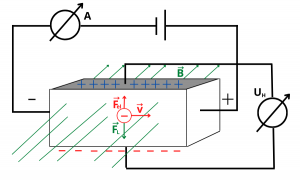
Figure 1: The working principle of the Hall Effect
The Hall voltage can be described by the following equation:
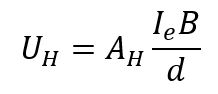
where Ie represents the supply current in the Hall element, B denotes the magnetic flux density, d the thickness of the sample, and AH the Hall coefficient.
The Hall voltage UH is directly proportional to the input current Ie and the magnetic field strength B. Hall Effect sensors utilize this relationship to measure a wide range of parameters, including magnetic field strength, electric current, speed, position, and rotational movement.
2. Types of Hall Effect Sensors
Hall Effect sensors can generally be divided into two main categories: analog (linear) sensors and digital sensors. Each type is designed for different measurement tasks depending on whether continuous signal output or switching behavior is required.
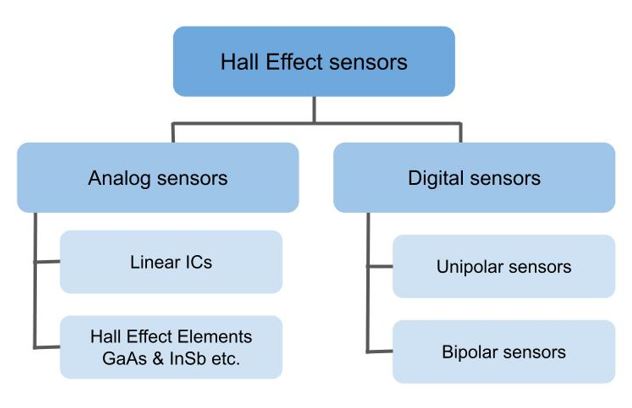
Figure 2: Categorization of Hall Effect sensors
2.1 Analog Hall Effect Sensors
Analog sensors, also known as linear Hall sensors, produce an output voltage that is directly proportional to the strength of the magnetic field. As the magnetic field increases, the output voltage changes continuously, enabling precise measurement of position, current, speed, or distance.
Two common implementations of analog Hall sensors are linear integrated circuits (linear ICs) and discrete Hall Effect elements.
2.1.1 Linear ICs
Linear ICs typically integrate a voltage regulator, a semiconductor Hall element, and a high-gain amplifier. Unlike digital Hall sensors, they do not include a Schmitt trigger or switching stage, meaning the output voltage is taken directly from the amplifier stage.
The output signal may be generated using either permanent magnets or electromagnets. Because the output voltage is limited by the supply voltage, signal saturation can occur when the magnetic field reaches peak levels.
2.1.2 Hall Effect Elements
Discrete Hall Effect elements generate output voltages through direct detection of magnetic fields. The temperature stability and sensitivity depend on the semiconductor material used.
- Gallium arsenide (GaAs) offers stable temperature characteristics.
- Indium antimonide (InSb) provides high sensitivity.
Due to their continuous linear output behavior, these elements are suitable for measuring displacement, distance, and rotational movement. Analog signals proportional to magnetic field strength can also be converted into digital signals using an A/D converter.
2.2 Digital Hall Effect Sensors
Digital Hall Effect sensors provide binary output states (“on” or “off”), making them suitable for switching and detection applications. In addition to a voltage regulator, Hall element, and amplifier, digital sensors include a Schmitt trigger to introduce hysteresis and prevent signal oscillation near switching thresholds.
Two common digital sensor types are unipolar and bipolar sensors.
2.2.1 Unipolar digital Hall sensor
The unipolar type of a digital Hall sensor is activated when the magnetic field of one polarity appears. Thus, if a magnet of opposite polarity to the sensor is used, there will be no detection at all by the device. And it only requires a magnetic South pole to operate and release the device.
2.2.2 Bipolar digital Hall sensor
Bipolar sensors require opposite magnetic polarities for activation and release. One polarity activates the sensor, while the opposite polarity resets it, providing improved stability in dynamic magnetic environments.
After understanding the classification and operating characteristics of Hall Effect sensors, the following section explores their common applications in modern automotive systems.
3. Applications of Hall Effect Sensors in Automotive Systems
Hall Effect sensors play an essential role in modern gasoline, diesel, hybrid, and electric vehicles. Their contactless sensing capability enables reliable detection, monitoring, and control across a wide range of automotive systems, contributing to both safety and performance optimization.
Safety and Protection Functions
In automotive environments, Hall Effect sensors provide important safety mechanisms. They help prevent electrostatic discharge risks in spark ignition systems, detect reverse polarity conditions in vehicle batteries, and monitor thermal overload or overcurrent situations. By continuously monitoring electrical parameters, Hall sensors support protection circuits that can detect malfunctions and enhance system reliability.
Power Electronics and Electrified Vehicle Systems
With the growing adoption of hybrid electric vehicles (HEVs) and electric vehicles (EVs), Hall Effect sensors are increasingly used in complex power electronic systems to regulate energy flow throughout the vehicle. Applications include AC motor control and DC-DC converters, where accurate current sensing ensures efficient operation.
Through their fast response time, wide bandwidth, low noise characteristics, and stable signal output, Hall sensors contribute to improved motor performance under different operating modes.
Transition from Mechanical to Electrically Driven Systems
Hall Effect sensors have also supported the transition from mechanical actuation and timing methods toward electrically driven systems. For example, traditional internal combustion engines rely on belt-driven components such as cooling fans or power steering pumps that operate continuously when the engine is running. Replacing these systems with electrically controlled actuators enables improved efficiency, better control precision, and optimized energy consumption.
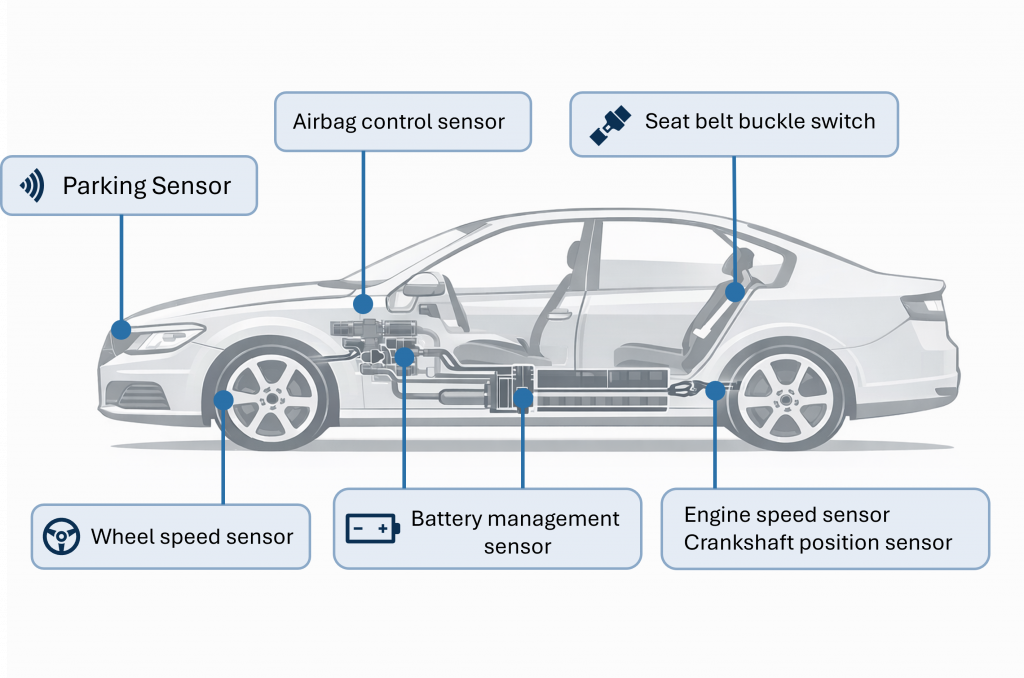
Figure 3: Typical placement of Hall Effect sensors in modern automotive systems
Typical Automotive Sensor Applications
Hall Effect sensors enable a wide variety of specific automotive sensing functions, including:
- Battery management sensor – Measure current flow and monitor battery health in electric vehicles.
- Parking sensors – Detect obstacles and measure distances between objects and the vehicle during parking, providing timely alerts to the driver.
- Engine speed sensors – Measure rotational speed by detecting magnetic changes at the crankshaft.
- Wheel speed sensors – Monitor individual wheel speed and support systems such as anti-lock braking (ABS).
- Crankshaft position sensor – Determine ignition timing and fuel injection for efficient engine performance and reduced emissions.
- Exhaust gas recirculation (EGR) valve position sensors – Assist in regulating exhaust gas flow.
- Seat belt buckle switches – Detect seat occupancy and safety status.
- Airbag control sensors – Detect seat position to ensure correct airbag deployment.
- Windshield wiper fluid level sensors – Monitor fluid levels and trigger warning indicators.
4. Advantages and Limitations of Hall Effect Sensors in Automotive Applications
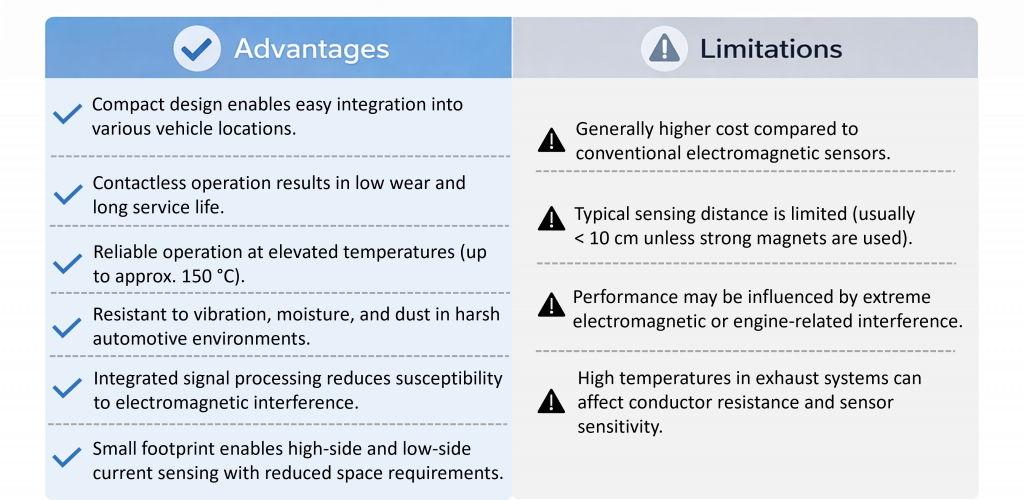
Hall Effect sensors are widely used in modern automotive systems due to their reliability, robustness, and contactless sensing capability. Compared to traditional sensing technologies such as variable reluctance sensors, they offer several technical advantages while also presenting certain limitations that must be considered during system design. The following overview summarizes the main strengths and constraints of Hall Effect sensors in automotive environments.
5. Conclusion
With their sensing functions for movement and positioning, Hall effect sensors have proven to be essential components of automobiles. The application of Hall Effect sensors in the automotive industry, particularly in sustainable mobility, has demonstrated their good performance and high reliability even in harsh environmental conditions despite a few limitations.
ChenYang Technologies offers a wide range of different Hall Effect sensors for multiple applications. Based on the requirements, ChenYang Technologies provides customers with the best solution for their applications. Even custom-made products with special requirements can be provided by us.
Visit our company website http://www.chenyang-gmbh.com for more information.
Learn more about the principles of Hall Effect current sensors.
Learn more about Battery Management Sensors and Systems in Electric Vehicles.
Literature:
AG, I. T. (n.d.). Magnetic position sensors. Infineon Technologies. Retrieved August 1, 2022, from https://www.infineon.com/cms/en/product/sensor/magnetic-sensors/magnetic-position-sensors/
AKM. (n.d.). Types and Principles of Hall Elements. AKM. Retrieved August 1, 2022, from https://www.akm.com/eu/en/products/hall-sensor/tutorial/hall-elements/#:~:text=A%20Hall%20element%20is%20an,and%204%20in%20Figure%201a
Allegro MicroSystems. (n.d.). Hall effect current sensing in electric and Hybrid Vehicles. Retrieved August 1, 2022, from https://www.allegromicro.com/en/Insights-and-Innovations/Technical-Documents/Hall-Effect-Sensor-IC-Publications/Hall-Effect-Current-Sensing-In-Electric-And-Hybrid-Vehicles
AZOSENSORS. (2019, September 4). An introduction to hall effect sensors. Retrieved August 1, 2022, from https://www.azosensors.com/article.aspx?ArticleID=16
Emilio, M. D. P. (2020, June 3). Hall device for Critical Automotive Sensing. Power Electronics News. Retrieved August 1, 2022, from https://www.powerelectronicsnews.com/hall-sensor-for-critical-automotive-sensing/
Falchenko, A., Anonym, & Hoa, N. D. (2022, January 19). Hall sensor: Principle of operation, types, application, how to check. AvtoTachki. Retrieved August 1, 2022, from https://avtotachki.com/en/chto-takoe-beskontaktnaya-sistema-zazhiganiya-avtomobilya/
Petruk, O., Szewczyk, R., Ciuk, T., Strupiński, W., Salach, J., Nowicki, M., Pasternak, I., Winiarski, W., & Trzcinka, K. (2014). Sensitivity and offset voltage testing in the hall-effect sensors made of graphene. Recent Advances in Automation, Robotics and Measuring Techniques, 631–640. https://doi.org/10.1007/978-3-319-05353-0_60
Popovic, R. S., Randjelovic, Z., & Manic, D. (2001). Integrated Hall-effect magnetic sensors. Sensors and Actuators A: Physical, 91(1-2), 46–50. https://doi.org/10.1016/S0924-4247(01)00478-2
Power Systems Design. (n.d.). Hall effect current sensing in Hevs and evs. Retrieved August 1, 2022, from https://www.powersystemsdesign.com/articles/hall-effect-current-sensing-in-hevs-and-evs/35/5367
Rutronik Elektronische Bauelemente GmbH. (2021, June 24). Hall sensors in automotive applications – suitable for a variety of parameters. Retrieved July 18, 2022, from https://www.rutronik.com/article/detail/News/hall-sensors-in-automotive-applications-suitable-for-a-variety-of-parameters/
Sensor Solutions Corp. (n.d.). Magnetic sensors for Automotive & Heavy Equipment. Retrieved August 1, 2022, from https://sensorso.com/automotive-heavy-equipment.html
Treutler, C. P. O. (2001). Magnetic sensors for Automotive Applications. Sensors and Actuators A: Physical, 91(1-2), 2–6. https://doi.org/10.1016/s0924-4247(01)00621-
International Energy Agency (IEA), Global EV Outlook 2024. Available at: https://www.iea.org/reports/global-ev-outlook-2024
6 thoughts on “Application of Hall Effect Sensors in Automotive Industry”